

From quiet, aching slow-burns to audacious allegories 10 yuri/GL anime that came from novels, light novels, or prose-adjacent origins. Each entry includes a short description and an ~200+ word human review.
1) Otherside Picnic (Urasekai Picnic)
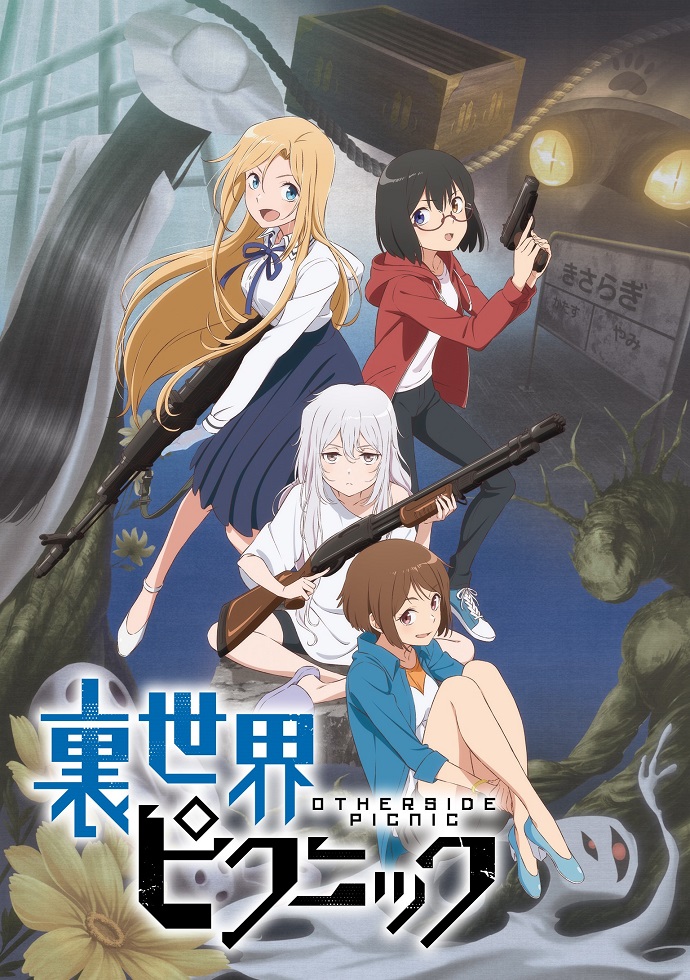
Description. Based on Iori Miyazawa’s light novels, Otherside Picnic follows two university students Sorawo and Toriko as they stumble into hidden “othersides” where internet urban legends and creepypasta become real. What starts as curiosity and salvage missions quickly turns into an obsessive, dangerous cycle of exploration and survival through spaces that refuse to obey logic.
Review. This series earns its place on a yuri list because of how it stages intimacy under pressure. The worldbuilding is satisfyingly weird: the otherside is never fully explained a deliberate choice that keeps the atmosphere uncanny and the monsters feel like nightmare versions of net folklore. The emotional core, though, is the two leads. Sorawo and Toriko come off initially as a mismatched duo: Sorawo is an investigative introvert, Toriko bolts in with a more impulsive survivalist energy. The show lets their differences be the source of both friction and tenderness. Romance here is not about declarations on a bridge; it’s the cumulative weight of repeatedly choosing the same person to face danger with. The adaptation trims and tightens the novels’ pacing but keeps the sense that there’s a bigger, stranger world beyond what the show can show. Sound design and quiet beats do much of the heavy lifting small, lingering scenes of the two of them on the verge of panic accomplish more than flashy effects. If you want WLW leads in the context of horror/sci-fi, this one widens the map for what yuri can be: messy, scary, and stubbornly human.
2) The Executioner and Her Way of Life (Shokei Shoujo no Virgin Road)
Description. Adapted from light novels, this is an isekai-universe spy/tragedy hybrid: Menou is an executioner tasked with eliminating “Lost Ones” (people summoned to the world), but when she meets Akari whose timeline-breaking ability defies logic everything becomes morally complicated. The setup is danger, ritual, and a romance that grows in the morally grey.
Review. This adaptation stands out because its central relationship is allowed to be thorny and ambiguous rather than sanitized. Menou is not a glamorous assassin archetype; she’s bureaucratic, hardened, and emotionally worn from duty. Akari’s power resetting consequences is narratively cruel because it robs the world of meaning while giving her freedom. Watching Menou fall for someone world-ending creates genuine tragedy; the show doesn’t offer easy moral comfort. The romance is not a subplot you can ignore the way the series stages intimacy (quiet confiscations of trust, the slow erosion of rules around them) means every soft moment is freighted. Production values hold up: fight scenes reveal character, the magic has rules, and the sound/music underscore key beats. If you want queer leads in a story that treats love as both salvation and a problem, this series does the work: it’s ethically messy, emotionally fierce, and memorably bleak in the best possible way.
3) Adachi to Shimamura
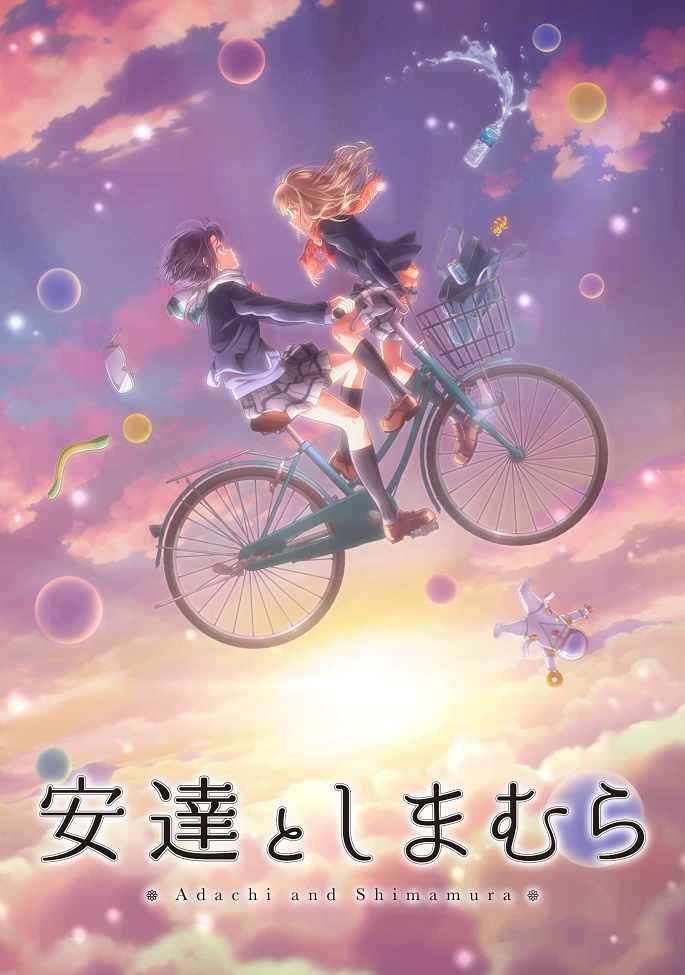
Description. From Hitoma Iruma’s light novels, Adachi to Shimamura is the archetypal slow-burn yuri: two high-school girls meet by chance on the gym mezzanine, skip classes together, and discover how their friendship shifts toward something deeper. The story is gentle, observational, and very interior.
Review. This show is the textbook for lovers of “mood > plot.” Its power lies in noticing details the nervous hands, the badly timed jokes, the way one gaze lingers too long. Adachi’s intensity is painful and honest; she’s the kind of character you want to shield yet also want to cheer for when she takes emotional risks. Shimamura is the foil: more socially comfortable but emotionally evasive, and the show is brave enough to keep her complicated rather than punishing her. The adaptation’s cinematography prioritizes close, quiet shots and slow edits; sound design fills the small gaps where dialogue refuses to name a feeling. For viewers who remember awkward dawning crushes with a nostalgic wince, this one nails the ache. It’s not flashy, and it can feel slow, but that slowness is its point a study of feelings that arrive too softly to be recognized at once. If you want a yuri romance that feels lived-in and honest, you’ll get mileage from this one.
4) The Magical Revolution of the Reincarnated Princess and the Genius Young Lady
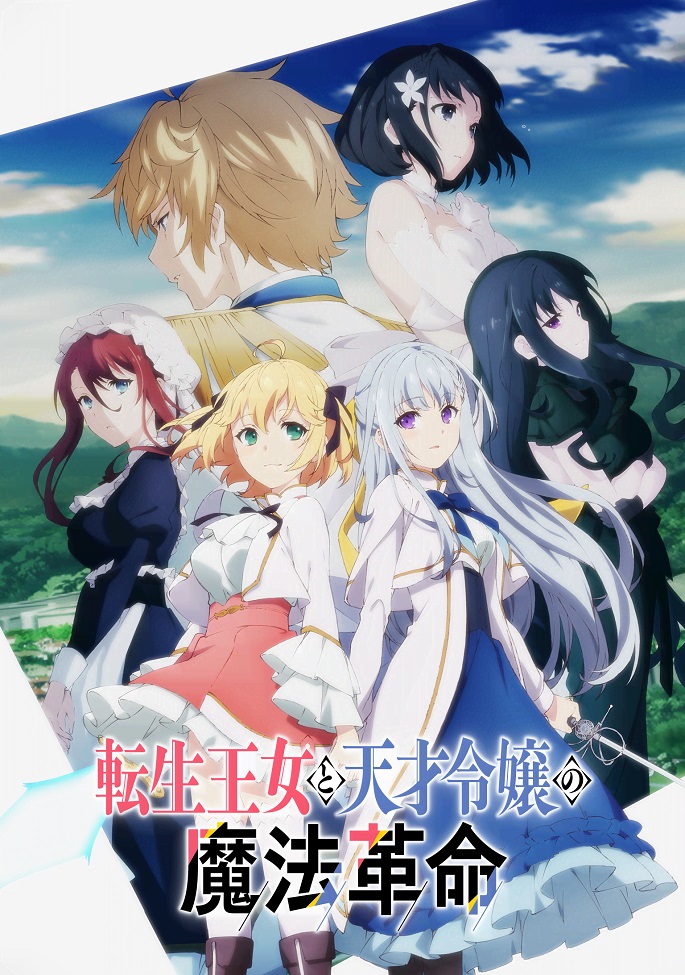
Description. Adapted from the light novel / web novel by Piero Karasu: Anisphia, a princess with a weird approach to magic (she treats it like R&D), and Euphyllia, the reserved genius, are drawn together by both script and spark. The series blends court politics with laboratory curiosity and an explicitly romantic WLW throughline that’s refreshingly direct.
Review. This one is a joy precisely because it refuses to hide the romance under furtive hints. It’s a fantasy rom-com with political stakes: Anisphia is delightfully disruptive, and Euphyllia’s arc from dutiful noble to someone who gets to claim her own life is satisfying in a modern, feminist way. The anime leans into the idea of reinvention: Anisphia’s experiments are literally inventing new magic, and their relationship invents a new template for noble duty and desire. The production leans bright and warm for date scenes and tight and serious for the political beats, giving the relationship room to breathe while still showing consequences. Most importantly, the romance is respectful: it’s built on consent, mutual growth, and shared ambition, which makes the payoff feel earned. If you want a yuri romance that’s cozy but not simplistic one that also cares about world-building this is a safe bet.
5) Maria-sama ga Miteru (Maria Watches Over Us)
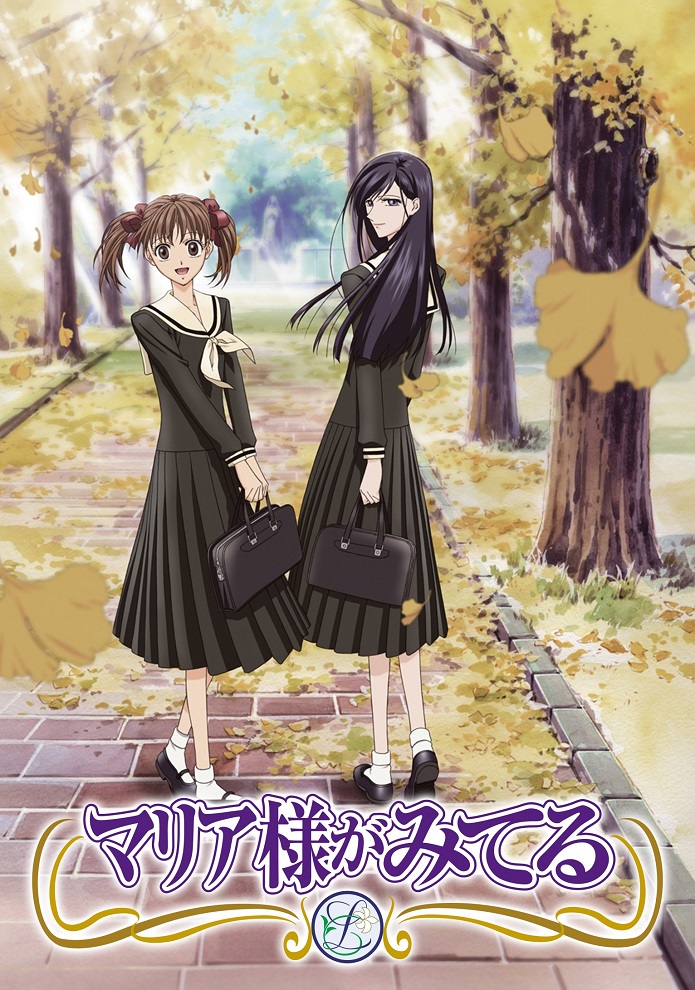
Description. The light-novel series by Oyuki Konno formed a template for “school soeur” dynamics: at the elite Lillian Girls’ Academy, upperclass and underclass pairings (sœur relationships) mix mentorship, devotion, and the slow recognition of deeper feeling. It’s formal, delicate, and full of carefully observed emotion.
Review. There’s an argument to be made that modern yuri borrows more from Maria-sama ga Miteru than any other single work: the emphasis on ritual, the idea that mentorship can be indistinguishable from love, and the way small gestures carry tremendous weight. The show’s strengths are tonal: long, lingering camera work, restrained color palettes, and a soundtrack that privileges stringed melancholy over pop hooks. It doesn’t offer loud catharsis it’s more like a slow unbuttoning of control. The characters are often trapped by decorum, and the drama arises from the cost of being honest in a world that prizes posture. Some viewers find it dated in pacing, but if you tune to its frequency, it’s addictively intimate. If you enjoy quiet emotional work the halting step toward a confession rather than the confession itself this is essential viewing.
6) Strawberry Panic!
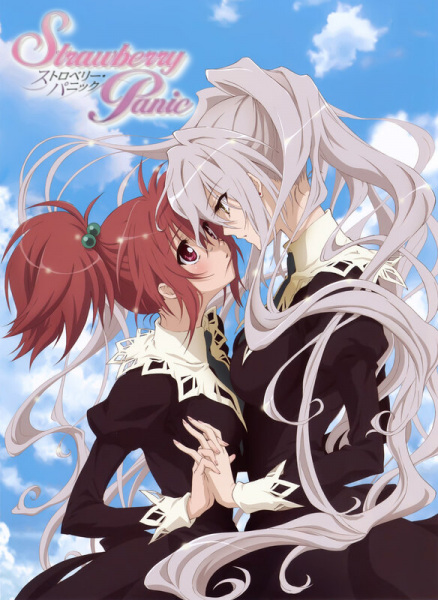
Description. What started as a serialized yuri project and expanded across media, Strawberry Panic! is melodrama in full bloom: three all-girls academies, student-council intrigue, crowned “Étoile” contests, and cinematic declarations of first love. It’s the early-2000s yuri operatic template.
Review. This one’s unapologetically earnest. It doesn’t bother with sly ambiguity everything is magnified, and the grand emotional gestures are the point. Costuming, classical setpieces, and highly dramatic editing make it feel like a stage production that got animated. Its legacy is obvious: plenty of later WLW anime owe it a nod for teaching a generation that queer affection could be the primary romance engine in a mainstream show. Not everything here is subtle some arcs creak and the animation budget wobbles but the show trades polish for heart. If you want a vintage yuri experience with operatic stakes and no shame, this is the one.
7) I’m in Love with the Villainess (Watashi no Oshi wa Akuyaku Reijou)

Description. Based on the web novel / light-novel roots of the franchise: an otaku wakes up inside her favourite otome game and decides to court the villainess rather than follow the original route. It’s a sly, reflexive romcom that uses meta-constraints to explore agency and desire.
Review. The series nails tone: it’s funny and subversive but also thoughtful about power and consent. Rei (the protagonist) is shamelessly forward, but the show makes sure Claire the villainess always has agency and space to say “no” without being gaslit. Their chemistry grows through awkward faux-dates, actual structural politics, and a surprisingly tender mutual work ethic. The anime adapts the novel’s jokes cleanly and leans into the political satire around status and roles in a court society; the romance serves as both joy and critique. If you want cheerful queer rom-com with a political brain, this one delivers laughs and heart in near-equal measure.
8) Hibike! Euphonium (Sound! Euphonium)

Description. From Ayano Takeda’s novels: a high-school concert band drama. Though not explicitly yuri, the Kumiko–Reina relationship carries some of the most WLW-coded emotional intensity in modern anime and played a major role in drawing yuri fandom attention to novel-adapted school dramas.
Review. Kyoto Animation’s adaptation is immaculate: precise composition, an ear for the friction of practice rooms, and a camera that understands the intimacy of musicians tuning together. The show’s romance is not labeled, but the emotional roar is real the way two people practice, compete, and make music together becomes a language of longing. Across seasons and films the series deepens into a portrait of craft, identity, and the people who shape you. If you want queer subtext handled with dignity and texture, this is a masterclass in subtlety and craft.
9) From the New World (Shinsekai yori)
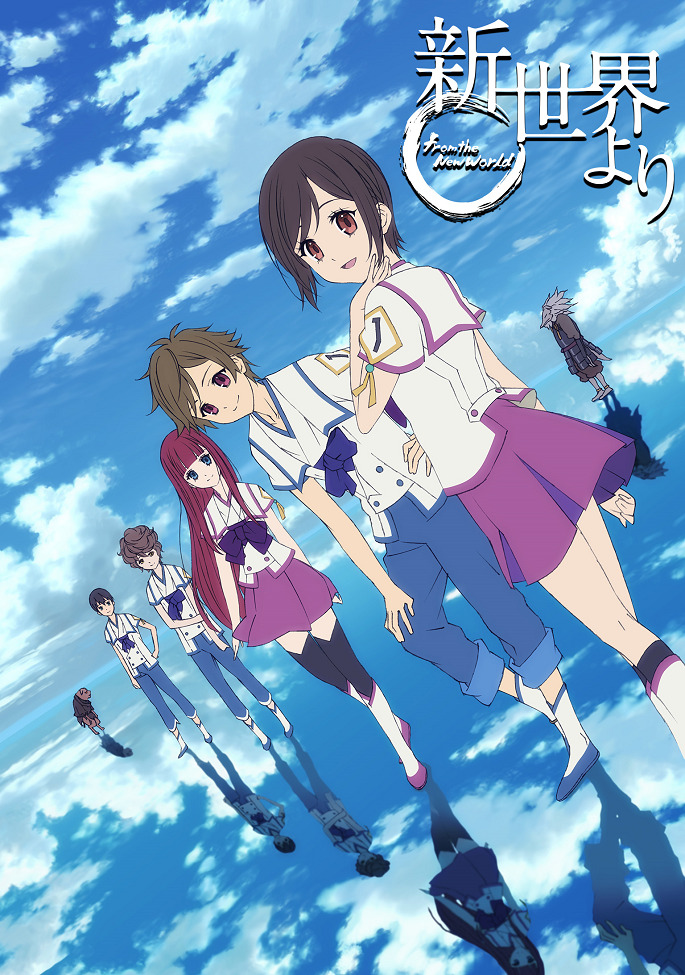
Description. Yusuke Kishi’s novel adapted into a sweeping, disturbing coming-of-age story set in a post-reshaped humanity. Romance is not the main thread, but WLW dynamics are present in the adolescent arcs and the show’s treatment of sexuality and social engineering resonates strongly with queer viewers.
Review. This is the heaviest, most ambitious pick on the list. It uses an epic scope to interrogate power, memory, and what societies demand from love. The adaptation keeps important thematic punches: the world’s control mechanisms, the slow creep of betrayal, and the tender, dangerous experiments of adolescent attachment. Saki’s intimate arcs friendships that become something more under pressure are handled with emotional bluntness and moral complexity. It’s not sweet; it’s thoughtful, chilling, and often heartbreaking. If you want yuri lines folded into grander philosophical horror, this is essential.
10) Yurikuma Arashi (Yuri Bear Storm)

Description. Kunihiko Ikuhara’s surreal allegory about social panic and queer love. Mixed-media with novelized tie-ins it weaponizes symbols, music, and repetition to examine how institutions police desire.
Review. This is not a comfort show; it’s more like a queer operetta cut with sharp political critique. Ikuhara uses bright colors and repeating motifs to show how society trains girls to fear each other. The story’s emotional payoff when forbidden love resists the machinery lands because the series actually shows the cost. If you like dense allegory, theatrical staging, and a narrator that loudly wants you to argue with it, this is a modern classic of queer anime.


